

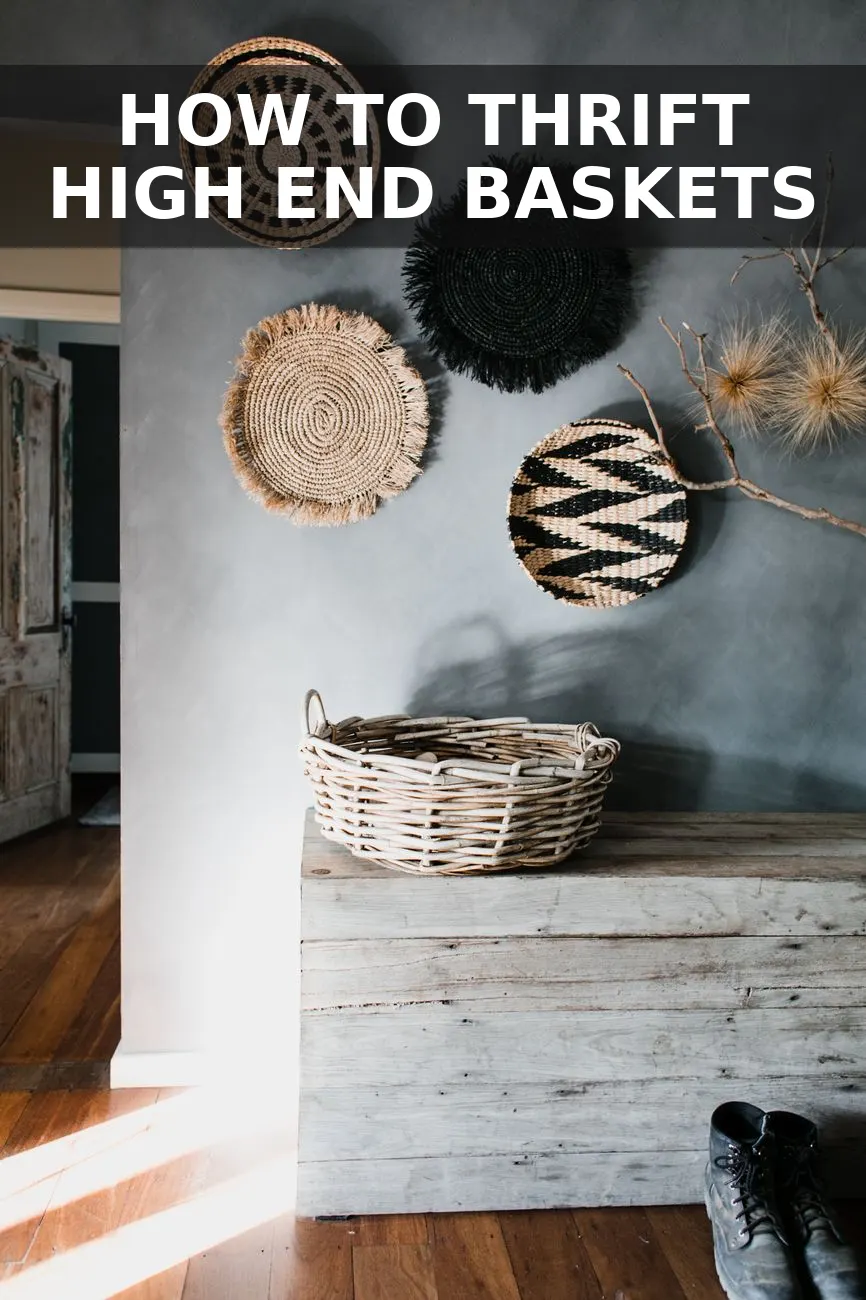
A high-end home goods boutique will happily charge $80 to $140 for a single sturdy woven basket, yet the back aisles of nearly every thrift store are overflowing with them for less than the price of a takeout sandwich. The problem is that half of those thrifted options are fragile, distorted, or coated in sticky grime that never fully comes off. Knowing what to grab and what to walk away from makes all the difference when sourcing entryway storage on a dime.
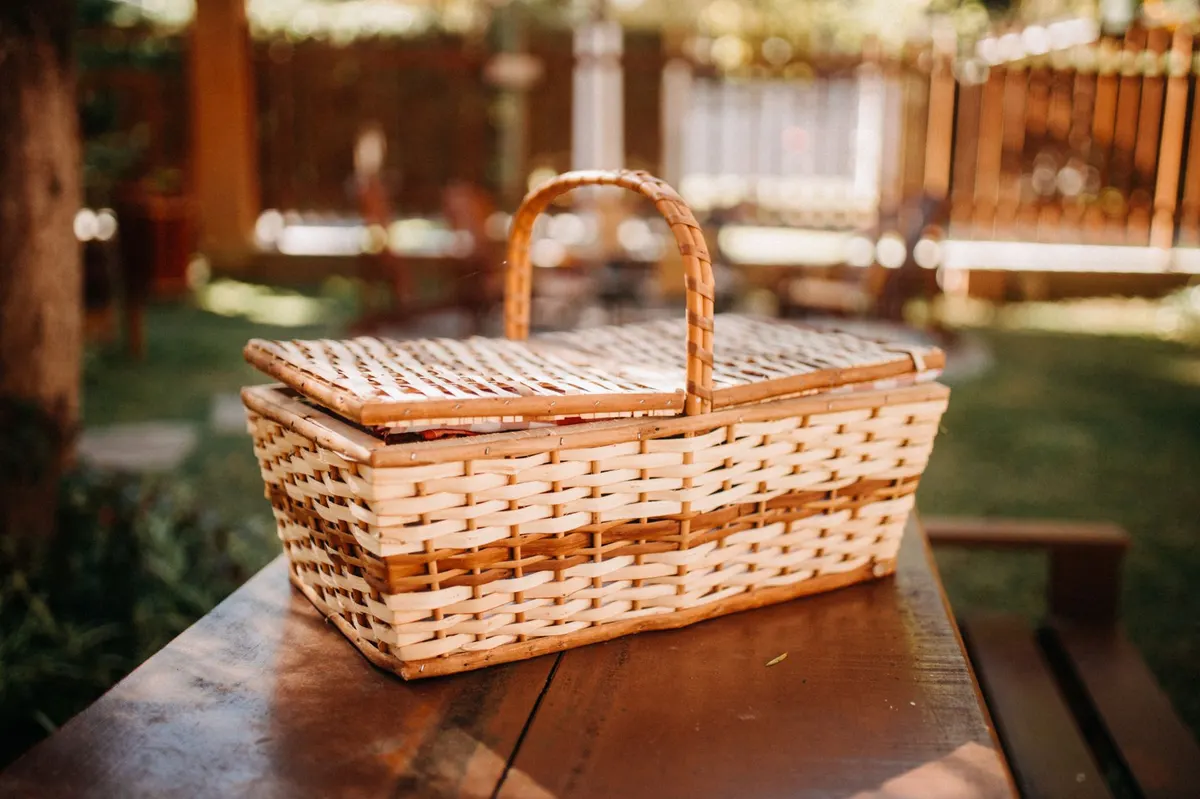
The Materials That Are Worth Buying
Baskets are rarely labeled with fiber tags when you find them second-hand, so your hands and eyes have to do the sorting. High-quality natural materials hold their shape for decades and look richer with age, while cheap imitations break down quickly.
- Split ash and oak splint: These feature flat, smooth wooden ribbons woven tightly together. They carry real structural weight, age into a warm honey tone, and are practically indestructible. High-end retailers often price heirloom splint baskets between $90 and $160, but thrift stores frequently mark them around $6 to $10.
- Rattan and cane: Rattan comes from solid jungle vines. It feels remarkably solid and dense compared to hollow materials. If you see thick, round bentwood rims or tight cane weaves, you are looking at substantial craftsmanship.
- Seagrass and thick jute: Often woven in chunky braided rows, these bring lovely earthy texture into an entryway. Look for pieces with a tight, firm tension that resists bending when you press down with your palms.
- Water hyacinth: Soft, thick, and braided, this material has a spongy feel that softens hard architectural lines. Check that the strands are tightly anchored to the underlying frame.
If you enjoy hunting down enduring natural textures, you might also like our guide on what to look for when thrifting wooden bowls and serveware, which relies on similar grain and wear checks.
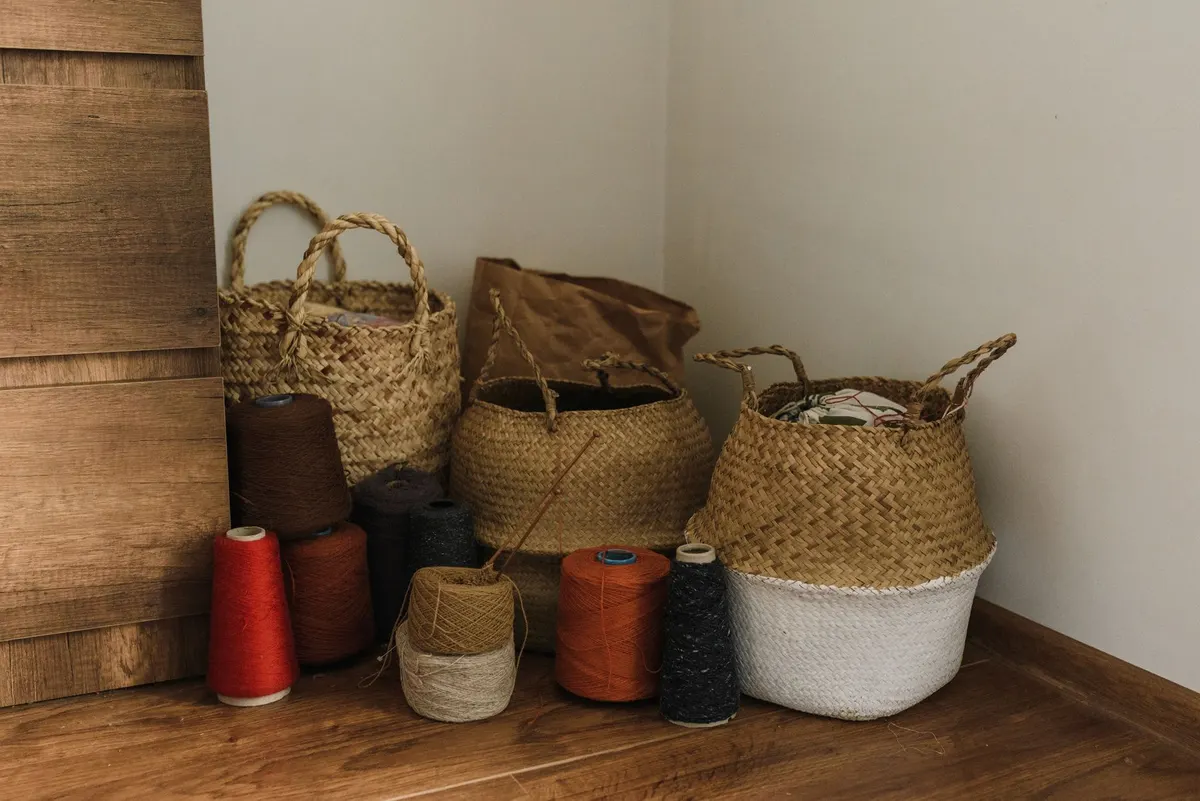
Three Immediate Red Flags to Leave on the Shelf
Not every bargain is a victory. Some thrifted woven pieces will only shed debris onto your entryway floor or snap apart the first time someone drops a heavy winter shoe inside.
- Dry rot and shattering willow: Run your fingertips lightly across the base and corners. If small dry twigs snap, splinter, or shower tiny crumbs onto the floor, the natural plant oils have completely dried out. No amount of oil or wax can permanently revive brittle, crumbling fibers.
- Warped wire inner skeletons: Many inexpensive baskets built over thin wire frames get squashed during transit. If the base wobbles wildly on a flat shelf or the wire rim is kinked, you will struggle to get it straight again. Always set the basket onto a flat shelf before checking the price tag.
- Dark, sticky surface stains: A little household dust wipes away with a damp cloth, but dark grease spots, grease rings, or black moisture mold embedded deep in raw fiber will permanently harbor unpleasant odors. Avoid anything with a rancid or heavily chemical smell.
A Quick Thrift Pricing and Quality Guide
Use this reference table to evaluate whether that second-hand storage piece is an exceptional find or a project better left behind. Typically, outfitting an entryway boot or catch-all setup this way costs about $10 to $25 total for a trio of great pieces.
| What to look for | Fair price | Red flags |
|---|---|---|
| Heavy woven split-wood or oak splint baskets | $6-$12 | Broken splints across the bottom support ribs |
| Round braided seagrass or water hyacinth totes | $4-$9 | Frayed handles, loose cord stitching, or mildew |
| Square cane or rattan locker bins | $5-$10 | Unraveling rim wrap, warped sides, crushed corners |
| Small desk trays and shallow key baskets | $2-$4 | Splintering fine willow twigs, water stains |
Prices are estimates and vary by store and region.
How to Clean and Prep Thrifted Baskets at Home
Once you bring your finds home, give them a fast refresh before setting them in your entryway or closet. Avoid submerging natural fibers completely in water, which can loosen glues, warp wood ribbons, and cause natural plant molds to wake up.
Start by taking the piece outdoors. Use a clean, dry paintbrush with stiff bristles to flick away loose dirt trapped between the weaves, then sweep your vacuum hose over the seams. For light general grime, wipe the surface with a lint-free cloth barely dampened with warm water and a drop of dish soap. If an unsealed basket looks faded or thirsty, rubbing a tiny dab of mineral oil or clear paste wax over the exterior with an old rag restores that rich, honey-toned glow instantly.
You Might Also Like
- The High-End Eclectic Brass Candlestick Gift Set for a Fraction of the Price
- DIY Vintage English Coat Stand From a Thrifted Wooden Coat Rack
- The Designer Boho Holiday Entryway Look for Under $40
Frequently Asked Questions
How do you get rid of a musty smell in a thrifted basket
Set it in direct sunlight for a full afternoon or mist it lightly with equal parts water and white distilled vinegar, then let it dry outdoors.
Can you reshape a squashed wicker or seagrass basket
Yes, steam it gently over a tea kettle or spray it lightly with warm water until the fibers soften, stuff it with towels into the right shape, and let it dry completely.
What is the fastest way to clean years of dust out of woven fibers
Use a dry, soft-bristle paintbrush to flick out loose debris, followed by the brush attachment on a vacuum cleaner.


0 Comments