

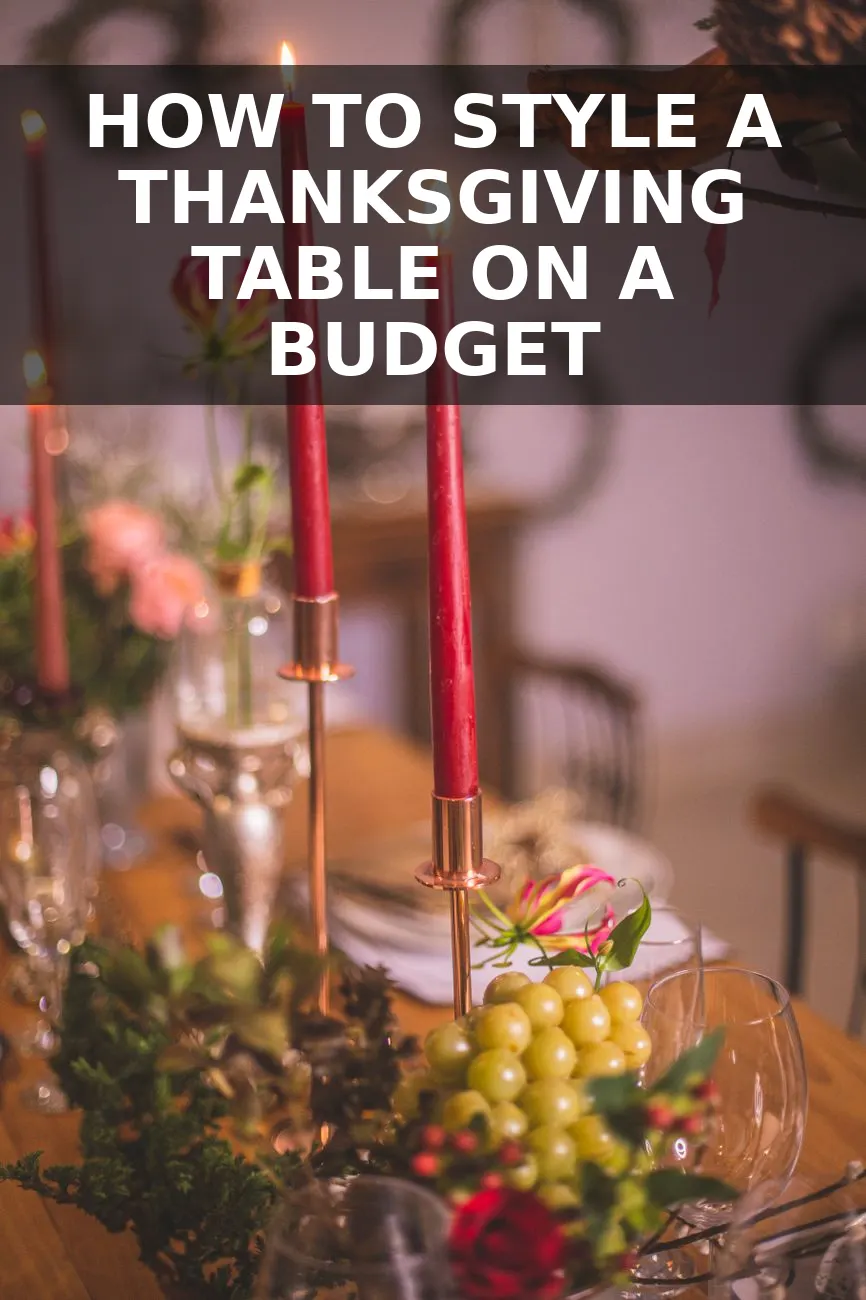
A magazine-worthy holiday table does not require expensive china, fine crystal, or a florist bill that rivals your grocery run. In fact, tables loaded down with giant, towering centerpieces usually get in the way of conversation the moment dinner is served. Creating an inviting holiday dining space is not about spending hundreds of dollars at a home boutique. It comes down to styling four intentional layers that build texture, warmth, and depth across your tabletop.
By treating the table like a composed display rather than a collection of random decorations, you can pull together a welcoming Thanksgiving setup for about $28 using basic finds from a thrift store, everyday pantry produce, and simple fabric.
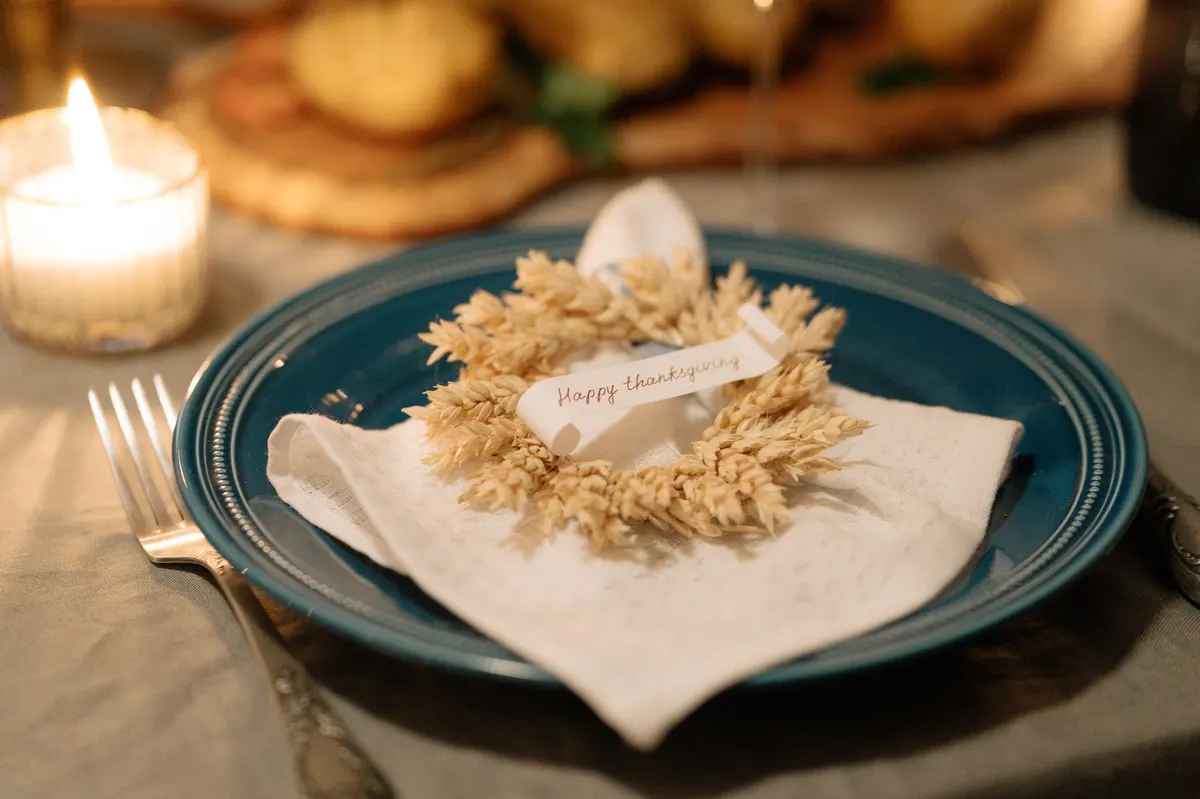
Layer 1: The Soft Foundation
Every balanced tablescape begins with a tactile ground layer. Bare tables often look stark against festive plates, while stiff vinyl table runners from retail aisles look flat and dated. Instead, look for relaxed, organic textiles that offer texture and drape.
- Washed cotton utility fabric: Head to a fabric store and buy two yards of unbleached muslin, raw cotton osnaburg, or oatmeal linen-cotton blend. Tear the edges instead of cutting them to create a soft, naturally frayed hem that mimics high-end European linen.
- Layered tea towels: If you have a long table and do not want to buy yardage, run three or four matching neutral waffle-weave or hemstitched kitchen towels down the center line, slightly overlapping the seams.
- Frayed drop cloth runner: A washed cotton canvas drop cloth cut into a fourteen-inch wide strip creates a thick, structured runner. Wash it twice in hot water with baking soda to soften the fibers until it drapes gently over the table ends.
Resist the urge to iron your base runner into crisp submission. Gentle wrinkles catch light and make the table feel comfortable, lived-in, and relaxed rather than stiff.
Layer 2: The Organic Centerline
Instead of buying artificial floral swags or foam pumpkins that look cheap and fill up storage bins all year, build your centerpiece using real, seasonal materials. A low horizontal runner made of branches and edible produce brings color without blocking eye contact across the table.
- Lay down clippings first: Cut sprigs of olive branches, rosemary, eucalyptus, or even bare branches with small dried seed pods from your yard or a local garden center. Lay them flat down the length of the fabric runner, working from the ends toward the middle so the cut stems hide under overlapping leaves.
- Scatter seasonal produce: Skip plastic gourds entirely. Place small clusters of real pears (like Bosc or Anjou), miniature pumpkins, persimmons, and walnuts along the branches. Five to seven small items create visual rhythm without overcrowding the serving dishes.
- Vary the spacing: Keep the greenery narrower in the middle where serving platters might need to land, and let it fan out slightly near the ends of the runner.
Layer 3: Ambient Height and Glow
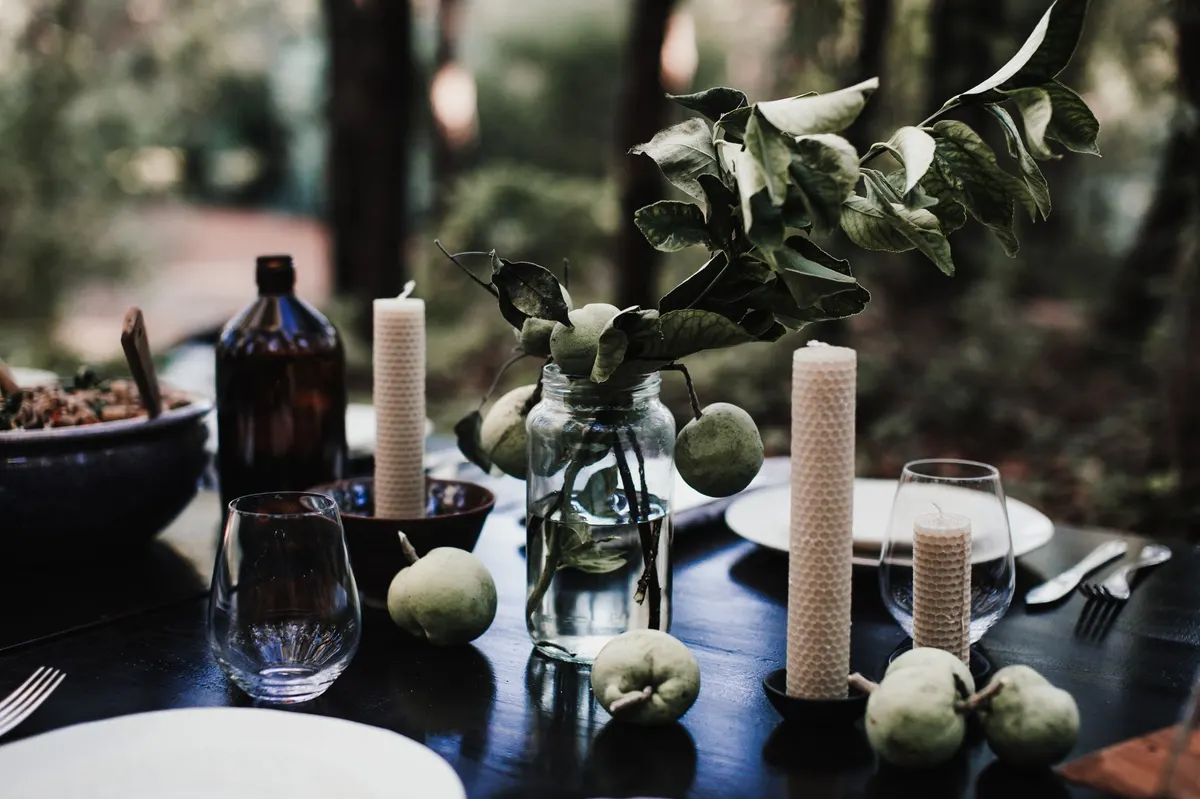
A flat table looks unfinished, but tall floral vases get shoved onto the sideboard as soon as people sit down. The trick is to get vertical height using thin elements that allow clear sightlines: slender taper candles in varied holders.
Mix metal finishes and glass shapes rather than buying a matching boxed set. If you are hunting for vintage brass candle holders at local secondhand shops, look for varied heights between three and eight inches tall. You can also mix in clear pressed glass or ceramic candle bases picked up for two or three dollars each.
Stagger five to seven tapers through your greenery runner. Choose warm tones like beeswax, soft taupe, muted olive, or rich amber instead of harsh stark white. When lit, the varying candle heights produce a warm golden layer across the table that feels cozy and intimate.
Layer 4: The Personal Place Setting
The final layer belongs to the individual guest experience. This is where small, inexpensive details make everyone feel cared for before the meal even begins.
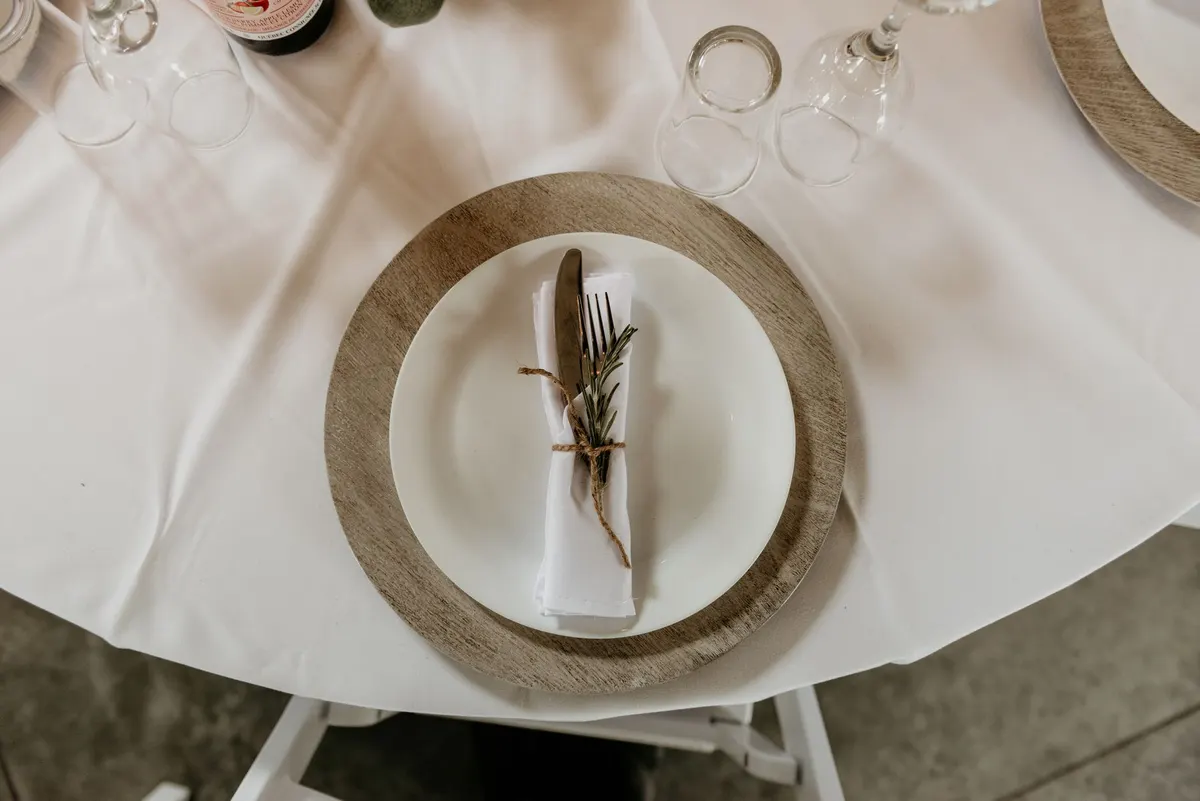
- Stack everyday plates: You do not need formal holiday china. A plain white ceramic dinner plate topped with a thrifted floral salad plate or a neutral stoneware bowl creates instant dimension. Mixing two different patterns or finishes keeps the table relaxed and collected.
- Flour sack napkins: Plain white cotton flour sack towels from a big-box store make generous, soft dinner napkins. Fold them into loose rectangles across the center of each top plate, or knot them once in the middle for a casual look.
- Handwritten herbal place cards: Cut small tags from heavy brown kraft paper or watercolor paper scraps. Write each guest name in simple ink, punch a small hole, and tie the tag around a fresh sprig of rosemary or sage with a short piece of jute twine. It costs virtually nothing, smells wonderful, and sits right atop the folded napkin.
What This Thanksgiving Setup Costs
Putting together this entire layered look is straightforward and gentle on your wallet. Here is how the materials and estimated pricing break down across each layer:
| Layer | What to use | Approx. cost |
|---|---|---|
| Layer 1: Base | Two yards of raw cotton muslin or torn canvas | $7 |
| Layer 2: Centerpiece | Foraged greenery sprigs, Bosc pears, and walnuts | $6 |
| Layer 3: Ambient Light | Thrifted mixed candle holders and taper candles | $9 |
| Layer 4: Settings | Cotton flour sack napkins, twine, and paper tags | $6 |
Prices are estimates and vary by store and region.
All in, this table comes together for about $28, using materials that either get eaten, reused next season, or saved for daily meals throughout the year. You get a rich, cohesive look that rivals dining spreads featured in high-end design magazines, while keeping your entertaining budget focused on the food itself.
You Might Also Like
- How to Turn a $12 Thrifted Wooden Mail Sorter into a $350 English Country Spice Box
- How to Turn a $12 Thrifted Plate Stand into a $350 Vintage French Plate Rack for $23
- How to Turn a $12 Thrifted Bread Basket into a $380 French Country Willow Wall Pocket
Frequently Asked Questions
How do you keep taper candles from dripping on a fabric runner
Look for smokeless, dripless paraffin or beeswax tapers, and make sure to trim the wicks to a quarter-inch before lighting so drafts do not cause uneven melting.
Can you prepare this table setting the day before Thanksgiving
Yes, assemble the runner, candle holders, and dinnerware the afternoon before, then tuck in fresh foraged greenery and fresh produce an hour before dinner so nothing wilts.
What is the best table runner length for a formal dinner look
Aim for a runner that extends about six to ten inches past each end of the table so it pools slightly off the edge without touching the floor where guests might trip on it.


0 Comments