

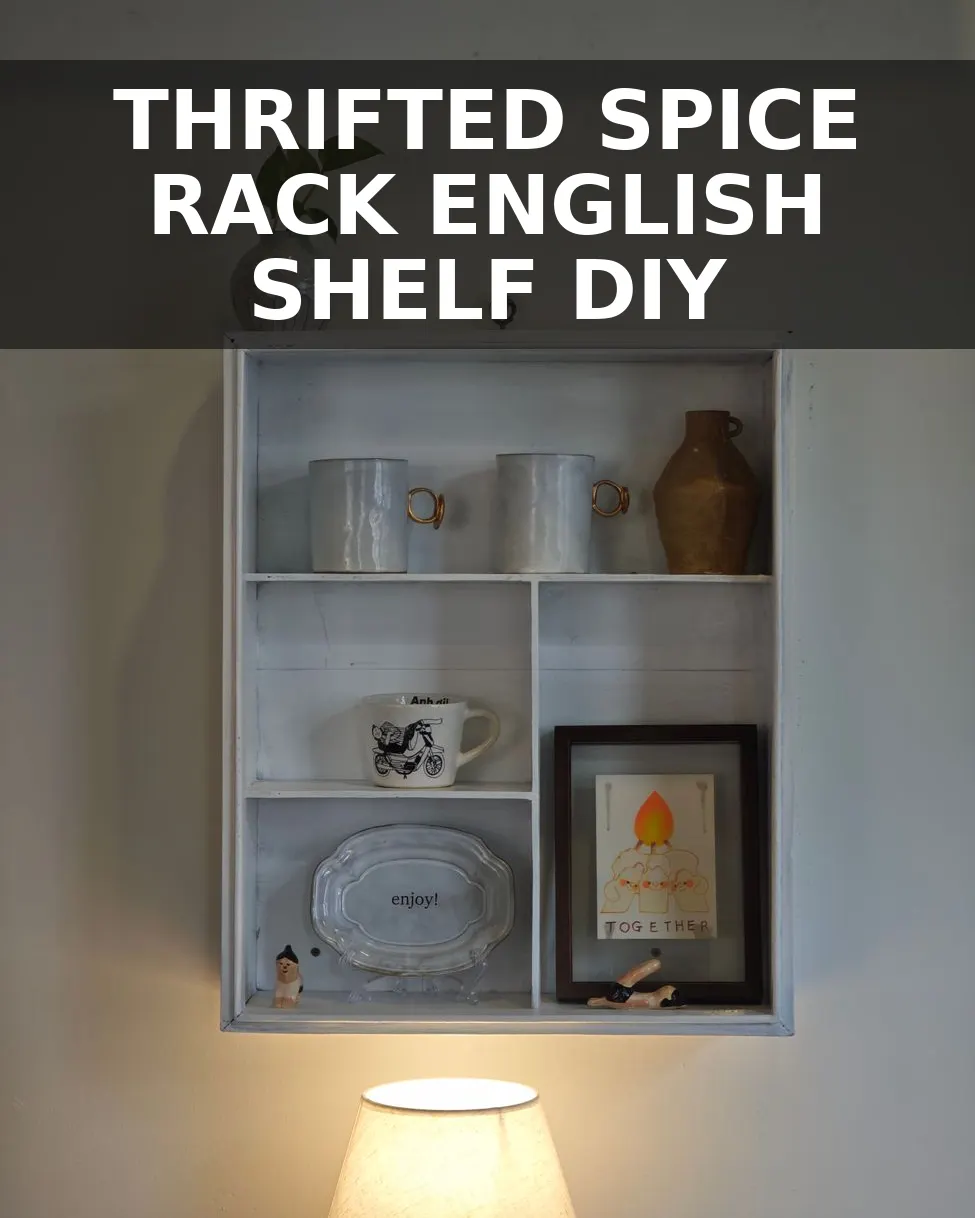
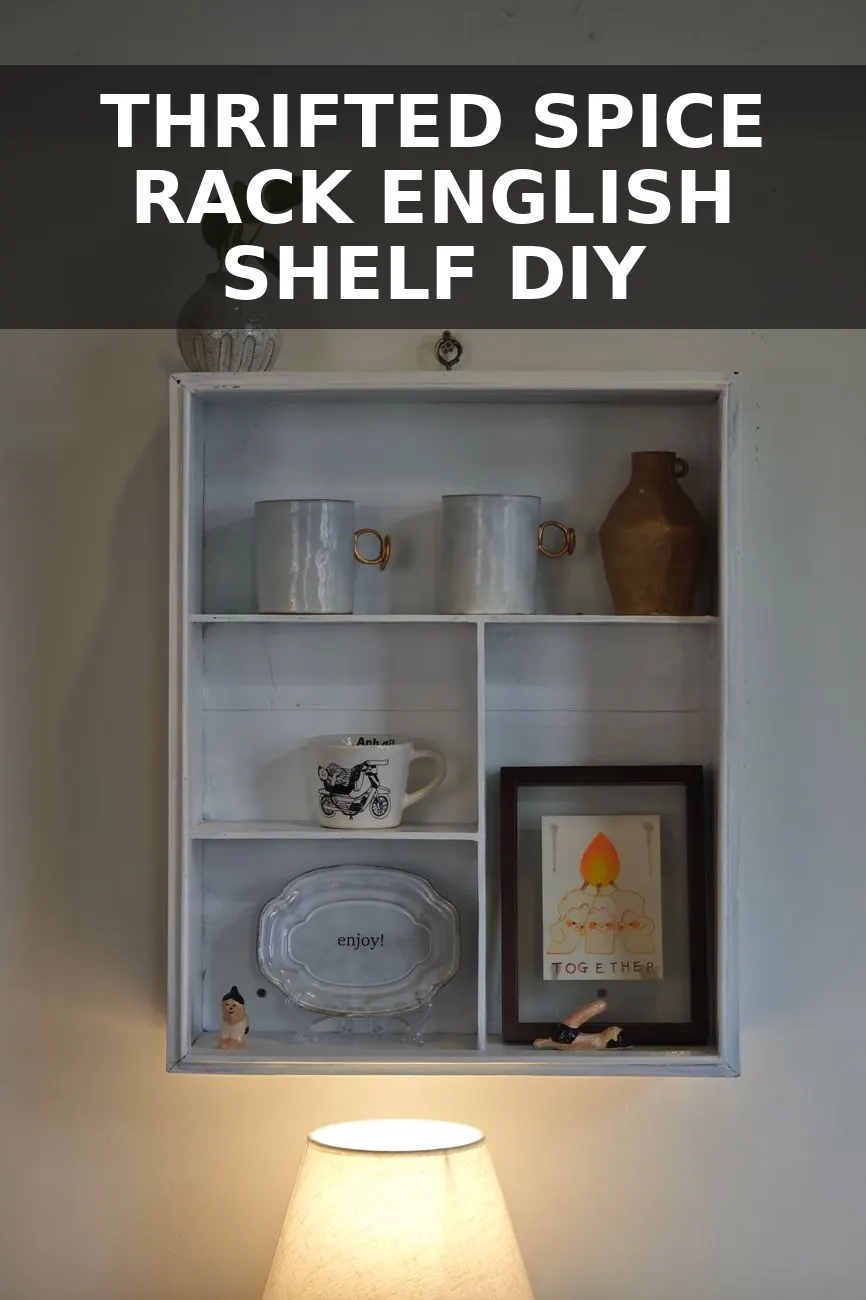
I spotted a battered, honey-oak spice rack at Goodwill last Tuesday sitting on a bottom shelf next to broken coffee makers, and I almost kept walking. But behind that greasy 1990s orange lacquer and those tiny clunky rails, I saw the exact skeleton of those dreamy, antique English cottage wall shelves that go for upwards of $380 on Etsy and high-end antiques sites.
Why Old Wooden Spice Racks Are Budget Gold
If you keep your eyes peeled at thrift stores or browse Facebook Marketplace for ten minutes, you will inevitably run into these two-tiered oak or pine spice racks. Nobody wants them anymore because modern kitchens have built-in drawer organizers or pull-out pantry racks. That means thrift shops price them dirt cheap—usually between $5 and $10.
What makes them brilliant candidate pieces for a custom shelf makeover comes down to three structural details:
- Solid wood construction: Most 1980s and 1990s spice racks were made from solid oak, pine, or rubberwood rather than cheap hollow particle board.
- Built-in proportions: The shelf spacing is already scaled perfectly for displaying small items like ironstone pots, antique medicine bottles, or small framed prints without overwhelming your wall.
- Keyhole hangers: Nine times out of ten, the back panel already has flush-mount keyhole slots cut directly into the wood, so you do not have to mess around with clunky mounting brackets later.
The Complete Budget & Materials Breakdown
I had a few basic supplies sitting in my garage cabinet like sandpaper, wood glue, and leftover paint. Even if you have to buy a couple of these items fresh, this quick project stays well under thirty bucks. All in, this project came out to exactly $21.00.
| Item | Source | Cost |
|---|---|---|
| Vintage Wooden Spice Rack | Goodwill | $8.00 |
| Decorative Wood Scroll Trim / Molding | Home Depot | $4.50 |
| Zinsser BIN Shellac-Based Primer (Sample Can) | Hardware Store | $3.50 |
| Sample Pot Satin Interior Paint (Muted Sage/Olive) | Target / Lowes | $3.00 |
| Wood Glue & Wood Filler | On Hand | $0.00 |
| Medium & Fine Sanding Sponges | On Hand | $2.00 |
If you love taking unassuming, secondhand finds and turning them into character-rich wall features, you might also like my project on how to make an English country peg rail with shelf for under twenty dollars.
Step-by-Step: From Dated Kitchen Rack to Heritage Wall Shelf
- Strip off the dated components. First, grab a small hammer or rubber mallet and gently tap out the round wooden spindles or metal retainers meant to hold spice jars in place. On most old racks, these wooden bars are just held in with thin finish nails and a dab of glue. They pop right off with minimal force.
- Fill the leftover spindle holes. Take a generous dab of stainable wood filler and press it firm into the holes where the front bars used to sit. Overfill them slightly because wood filler shrinks as it dries. Let it cure for two hours, then sand it flush with 120-grit sandpaper until you cannot feel the seam with your fingers.
- Add an architectural detail to the top or bottom. English country shelves almost always feature a subtle crest or scalloped accent. I bought a 12-inch strip of classic wooden egg-and-dart moulding at Home Depot for $4.50, measured the top edge of my spice rack, and cut the piece to size using a basic hand saw. Run a heavy bead of Gorilla Wood Glue across the back, press the molding onto the top rail, clamp it tightly, and let it set for an hour. If you want a softer look, you can use a jig saw to cut a curved arch into a spare piece of scrap pine instead—similar to the technique I used for my custom scalloped floating shelf.
- Scuff sand the entire piece. You do not need to strip the wood down to bare timber, but you do need to knock off that glossy 1990s topcoat. Rub every surface down with a medium-grit sanding sponge (around 150-grit) until the varnish looks dull and chalky. Wipe away all dust with a damp microfiber cloth.
- Apply a shellac-based primer coat. Oak contains heavy tannins that will bleed orange right through regular latex paint, no matter how many coats you apply. Brush on one solid coat of Zinsser BIN Shellac-Based Primer. It dries in about fifteen minutes and seals the old stain completely.
- Paint with two thin coats of muted color. Skip bright stark white here if you want that true vintage feel. Choose a soft, grounded shade like a dusty olive green, warm stone, or muted terracotta. I picked up a sample pot of satin-finish paint in a deep, muddy sage green. Apply two thin coats with a small foam roller or soft nylon brush, letting it dry thoroughly between coats.
- Distress the edges for natural patina. Once the paint is completely dry to the touch, take a 220-grit fine sanding block and lightly drag it along the sharp outer edges, corners, and detail lines of the wood trim. You want just a tiny hint of the original dark wood showing through where natural hand wear would happen over fifty years. Finish by rubbing a dime-sized amount of clear antique furniture wax across the surface using an old cotton rag.
Styling Your New Cottage-Style Shelf
The magic of these narrow wall shelves lies in how versatile they are once mounted. Because they are fairly shallow—usually around three to four inches deep—they do not stick out awkwardly into high-traffic hallways or small rooms.
I mounted mine in the wall space right next to our kitchen window frame. Here are a few simple ways to style it without making it look cluttered:
- In the Kitchen: Stack small antique ironstone saucers, display a couple of small brass salt pots, or rest a tiny framed landscape print against the back wall.
- In the Powder Room: Line up glass apothecary jars filled with cotton swabs, rolled linen washcloths, and a small scented candle.
- In an Entryway: Use it as a drop spot for mail, leaning a small vintage pocket mirror against the center panel.
If you enjoy repurposing smaller thrifted wooden pieces around your home, check out how I transformed a chunky wooden holder into an English country book caddy using basic craft materials.
Next time you walk past that cluttered kitchen aisle at your local thrift store, skip the Teflon pans and look closely at those ugly orange spice racks. With an hour of active effort and a cheap pot of paint, you can bring home a gorgeous piece of English country charm for a tiny fraction of boutique retail prices.


0 Comments