

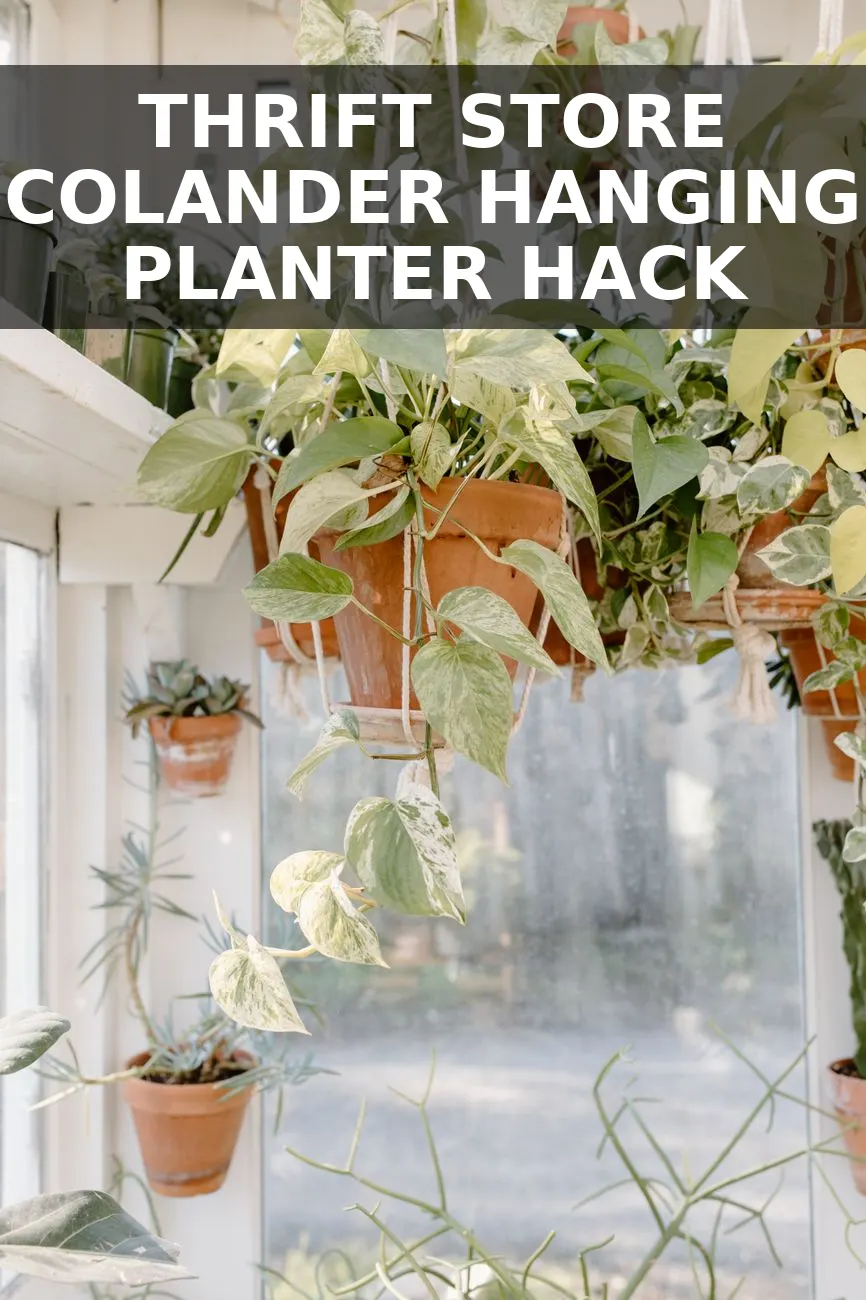
If you walk past the kitchenware section at the thrift store because your cupboards are already full, you are missing out on one of the absolute best raw materials for high-end garden flips. Last Tuesday, I spotted a battered, lime-green metal colander sitting on the bottom shelf of my local Goodwill for six dollars. It had some scuffs, a layer of kitchen grease, and a color that screamed early-2000s apartment. But beneath that terrible paint job, it had the perfect shape: a classic footed bowl with solid side handles and, most importantly, built-in drainage holes. With a few basic supplies from the hardware store, I turned it into a gorgeous, weathered zinc hanging planter that looks identical to the ones selling for hundreds of dollars at boutique garden centers.

Why a Colander is Secretly the Ultimate Planter
Most hanging planters you buy online have one major flaw: they do not have drainage. You either have to drill your own holes through thick ceramic, or accept that your plants are going to end up with root rot. A metal colander solves this problem instantly. The drainage is literally built into the design, beautifully spaced in patterns around the sides and bottom. Plus, metal colanders are incredibly sturdy. They can easily support the weight of wet soil and heavy trailing vines without bending or cracking like cheap plastic alternatives. If you are tight on square footage and need to use vertical space for your greenery, hanging one of these in a sunny corner is a brilliant move. It keeps your countertops clear while adding a lush, layered look to your room.
I wanted that authentic, heavy-metal zinc look that you see in old European estates. True antique zinc gets this gorgeous, chalky, slightly gritty white crust over a deep charcoal gray base. Buying an authentic vintage zinc bowl can easily set you back three hundred dollars or more, especially once you add heavy brass chains. By faking the finish with a quick paint technique, we get that exact same historic look for a fraction of the cost. If you love this weathered aesthetic, you might also like my project on how to make a vintage French plant theater using an old plant stand, which pairs beautifully with this hanging planter for a cozy indoor garden vibe.
What to Look For in the Thrift Aisle
When you are scanning the shelves at your local thrift store, you want to keep an eye out for a few specific structural features. First, look for a colander that is made of metal rather than plastic. Aluminum, stainless steel, and enameled steel are all great candidates. Plastic colanders will not hold up over time when hung, and the paint is much more likely to peel. Second, pay attention to the base. A pedestal base is fantastic because it adds height and a beautiful, traditional silhouette, but a flat-bottomed colander works too. Finally, check the hole pattern. Star-shaped patterns, concentric circles, or delicate pinholes all add beautiful character once painted. Do not worry about rust, staining, or ugly colors—that is exactly what our textured paint technique is going to fix.
The Secret to Faking an Aged Zinc Patina
To get a realistic zinc finish, you cannot just spray-paint the metal a flat gray. It will look like plastic. Real zinc has texture, mineral build-up, and varying tones of gray, charcoal, and white. The secret to mimicking this texture is a simple kitchen ingredient: baking soda. By dusting baking soda onto wet spray paint, you create a gritty, organic texture that perfectly mimics oxidized metal. Once that base dries, we use a dry-brush technique with cheap acrylic craft paint to build up the chalky mineral deposits.
For the hardware, skip the cheap silver chains from the hardware aisle. They look too modern. Instead, look for raw brass jack chain. It has an elegant, vintage feel that oxidizes beautifully over time when exposed to moisture from watering your plants.
Step-by-Step: From Kitchen Scrap to Garden Antique
- Clean and prep the metal: Give your colander a thorough scrub with warm, soapy water and a stiff brush to remove any lingering kitchen grease or dust. If the original paint is highly glossy or peeling, scuff it up lightly with a medium-grit sanding block so the new paint has something to grip.
- Apply the texture coat: Lay your colander upside down on a drop cloth or a piece of cardboard outdoors. Shake a can of matte charcoal spray paint and apply a light, even coat. While the paint is still wet, grab a handful of dry baking soda and lightly toss it over the surface. It will stick to the wet paint, creating a rough, gritty texture. Let it dry for about fifteen minutes, brush off the excess loose soda, and then spray another light coat of charcoal paint over the top to seal it in.
- Paint the interior: Once the outside is dry to the touch, flip the colander over and repeat the paint and baking soda process on the inside rim. You do not need to do the entire interior since it will be filled with soil, but painting the top couple of inches ensures no bright green or silver metal peeks through.
- Dry-brush the chalky patina: Squeeze a small nickel-sized dollop of matte light gray or off-white acrylic paint onto a paper plate. Dip a dry, stiff-bristled paint brush into the paint, then wipe almost all of it off onto a paper towel until the brush feels dry to the touch. Lightly sweep the brush over the textured colander, focusing on the raised details, the rim, and the handles. This highlights the texture and looks exactly like the chalky white mineral deposits found on real antique zinc.
- Attach the brass hanger: Use a pair of pliers to open the links of your brass jack chain. Cut three equal lengths of chain, about twelve to fifteen inches each, depending on how low you want the planter to hang. Loop one end of each chain through the pre-existing drainage holes near the top rim of the colander, spacing them evenly in a triangle shape. Squeeze the links shut. Bring the top ends of the three chains together and hook them onto a solid brass O-ring.
Choosing the Best Plants for a Colander Planter
Because colanders have exceptional drainage, they are incredibly versatile homes for a wide variety of plants. If you struggle with overwatering, this is the perfect setup for you. Plants that hate wet feet will thrive here. For a classic English cottage or French country look, trailing ivy, creeping fig, or string of pearls look absolutely stunning. The way the delicate leaves spill over the rugged, dark zinc finish creates a beautiful contrast of textures. If you are hanging this in a high-light area like a kitchen window, you can even plant a mini herb garden. Rosemary, thyme, and oregano all love fast-draining soil and look beautiful growing together in a wide, shallow bowl. Just make sure to water a bit more frequently than you would in a solid plastic pot, as the airflow through the drainage holes means the soil will dry out faster.
The Material Cost Breakdown
Here is exactly what I spent to bring this project to life. I already had the baking soda and a bottle of light gray acrylic craft paint in my supplies, so my out-of-pocket cost was incredibly low. All in, this entire project cost me just eighteen dollars.
| Item | Source | Price |
|---|---|---|
| Thrifted Metal Colander | Goodwill | $6.00 |
| Matte Charcoal Spray Paint | Home Depot | $6.50 |
| Brass Jack Chain (3 feet) | Ace Hardware | $3.50 |
| Brass O-Ring & S-Hook | Ace Hardware | $2.00 |
| Baking Soda & Acrylic Paint | On Hand | $0.00 |
| Total Cost | - | $18.00 |
Once your chains are secure, line the bottom of the colander with a small piece of landscape fabric or a coffee filter to keep the soil from washing out of the drainage holes during watering. Fill it with a high-quality potting mix and plant your favorite trailing greenery. I chose a pothos because it grows quickly and looks stunning cascading over the aged zinc edges. Hang it from a sturdy ceiling hook in a bright room, and enjoy your beautiful, custom piece of vintage garden decor!
You Might Also Like
- How to Turn a $10 Thrifted Wicker Basket into a $350 French Country Willow Wall Pocket
- How to Turn a $12 Thrifted Rolling Utility Cart into a $450 French Country Metal Trolley
- How to Turn an $8 Thrifted Plant Bracket into a $360 Vintage English Wall Pendant for $25
Frequently Asked Questions
Do I need to plug the holes so the soil doesn't fall out
No, just line the inside with a coffee filter or a small piece of landscape fabric before adding soil to keep it contained while letting water drain freely.
Can I hang this outside in the rain
Yes, but make sure to use an outdoor-rated matte clear sealant spray over the painted surface to protect the faux finish from harsh weather.
How do I water the plant without making a mess indoors
Since it drains freely, take the planter to the sink, water it thoroughly, let it finish dripping for ten minutes, then hang it back up.


0 Comments