

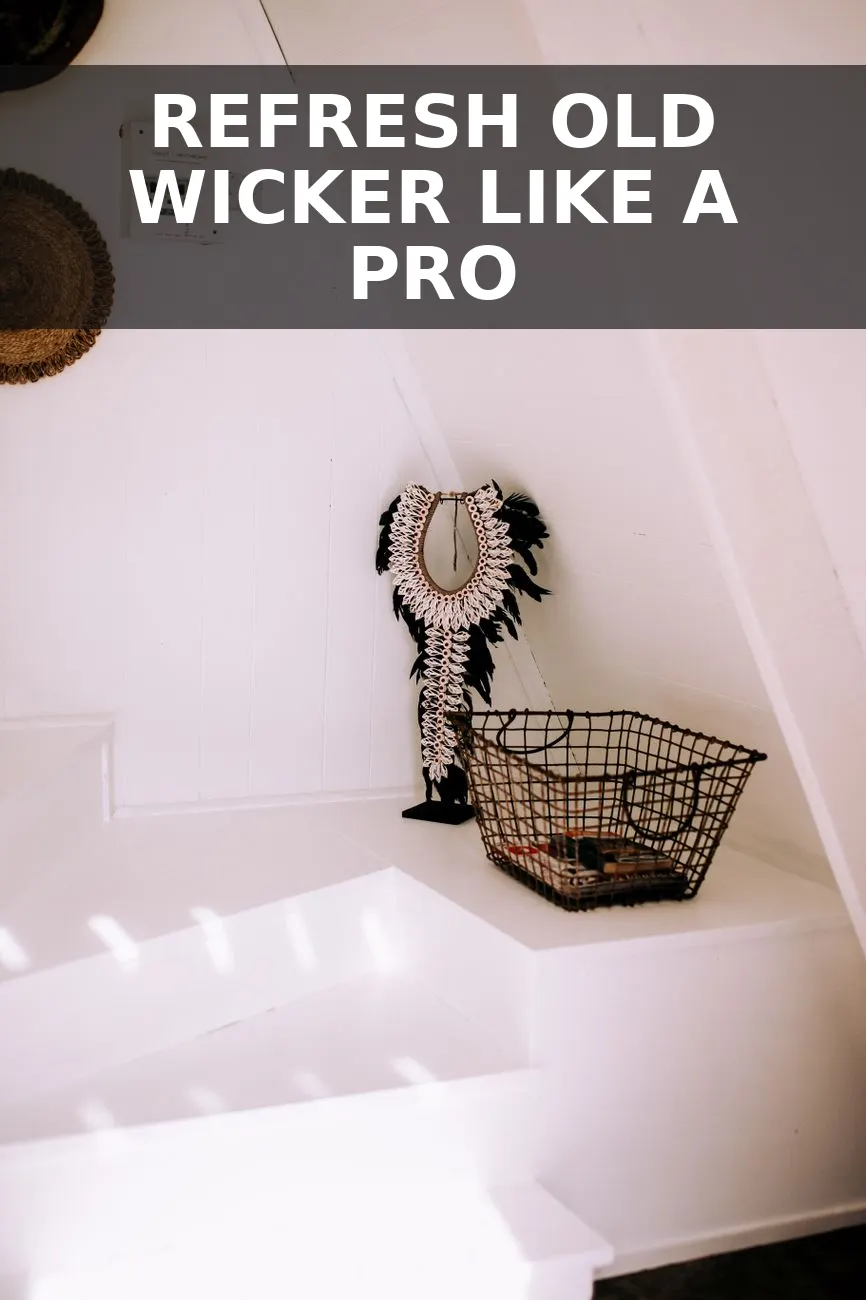
A stair landing nook often collects dust, dry air, and scuffs from daily foot traffic, especially when styled with second-hand woven pieces. Keeping vintage natural fibers clean and conditioned preserves their warmth and charm for those dark autumn evenings. Here is how to safely clean, refresh, and maintain vintage wicker without damaging the delicate weave.
Gather a microfiber cloth, white vinegar, a soft toothbrush, and a cup of warm water. Total preparation takes about ten minutes before starting.
Testing and Preparation
Before applying any moisture to an older woven piece, check the integrity of the material in an inconspicuous spot underneath. Dry wicker becomes brittle over time, and aggressive scrubbing can snap the strands permanently.
- Inspect the weave for broken wraps or powdery residue that indicates dryness.
- Vacuum the entire piece using a soft brush attachment to remove loose dirt from the deep crevices.
- Set the item in a well-ventilated area while you work so it can dry evenly.
A common mistake is using a standard vacuum head with too much suction, which can pull at fragile vintage wraps. Always use a hand-held upholstery brush attachment with soft bristles to protect the antique structure.
To fix this error if a wrap comes loose during vacuuming, immediately press the fiber back into position. Secure the junction with a pin-sized dot of PVA glue and hold it down with painter's tape for twenty minutes until bonded.
The Gentle Cleaning Method
Harsh chemical cleaners strip natural oils from plant fibers, leading to cracks and splits. A simple water-and-vinegar solution cuts through dust and grime safely while restoring a fresh scent.
- Mix equal parts warm water and white vinegar in a small bucket with a few drops of mild dish soap.
- Dip a soft microfiber cloth into the liquid and wring it out completely until it is barely damp.
- Wipe down the entire surface gently, following the direction of the weave.
- Use a soft-bristled toothbrush to reach into tight corners and wrapped joints.
- Wipe a second time with a clean, dry cloth to absorb lingering moisture.
If stubborn stains persist in the woven gaps, do not scrub harder. Instead, dab the spot with a cotton swab dipped in the same diluted vinegar solution until the mark lifts away safely.
| Item or material | Safe method | Supplies cost |
|---|---|---|
| Natural Wicker | Damp cloth with diluted vinegar and mild soap | $4-$6 |
| Boiled Linseed Oil | Thin coat rubbed with a lint-free cloth | $6-$8 |
| Craft Glue | Tiny dab for securing stray ends | $2-$4 |
Prices are estimates and vary by store and region.
Each item costs between $2 and $8, so you can pick the ones that fit your budget. Once the piece is completely dry, apply a very thin layer of boiled linseed oil with a rag to nourish the dry fibers and bring back a healthy sheen.
For a cheaper swap, use food-grade mineral oil instead of boiled linseed oil if you already have it in your kitchen pantry. It conditions dry plant fibers just as effectively without leaving an overwhelming scent behind in a small hallway.
Apply just one teaspoon of oil per square foot of woven surface. Buff away any excess liquid immediately using a dry cotton rag so the landing piece never feels sticky to the touch.
What to Avoid
Protecting second-hand finds means knowing which common cleaning habits cause permanent harm to natural materials. Skipping these mistakes keeps your decor intact for years.
- Never submerge natural wicker in water or spray it with a high-pressure hose.
- Avoid furniture polishes containing silicone, which build up a sticky film in the weave.
- Do not place damp wicker directly next to a harsh heat source or in bright sunlight to dry, as rapid drying warps the frame.
Keep the finished piece looking its best by dusting the landing nook weekly with a dry microfiber duster. Avoid heavy commercial aerosol sprays, which coat the natural fibers in a dull, dust-attracting residue.
Maintain the room's humidity between forty and fifty percent during winter months using a small humidifier. This prevents the vintage plant fibers from drying out, cracking, and snapping under normal daily use.
You Might Also Like
- Does Faux Snow Spray Actually Look High-End? What Happens When You Try It on Holiday Decor
- 5 Holiday Decorating Mistakes That Make Your Small Space Look Cluttered (and How to Fix Them)
- A Rustic Cabin Leather Hurricane Lantern From a Thrifted Glass Cylinder for Under $20
Frequently Asked Questions
Can I use dish soap on vintage wicker
Yes, a few drops of mild dish soap in warm water work well, but keep the water minimal so the natural fibers do not soak through.
How do I fix loose strands on old wicker
Dampen the stray strand with warm water to make it pliable, press it back into place, and secure it with a tiny dab of clear craft glue.
What is the best way to dust tight woven corners
A soft-bristled artist paintbrush or a can of compressed air easily sweeps dust out of deep crevices without snagging the fibers.


0 Comments